Virtual Office vs. Registered Agent in Maryland. This is one of the most common points of confusion for new Maryland business owners, and it matters because getting it wrong can mean missed legal notices or a rejected state filing. Short version: a virtual office and a resident agent solve two different problems, and one doesn’t automatically substitute for the other.

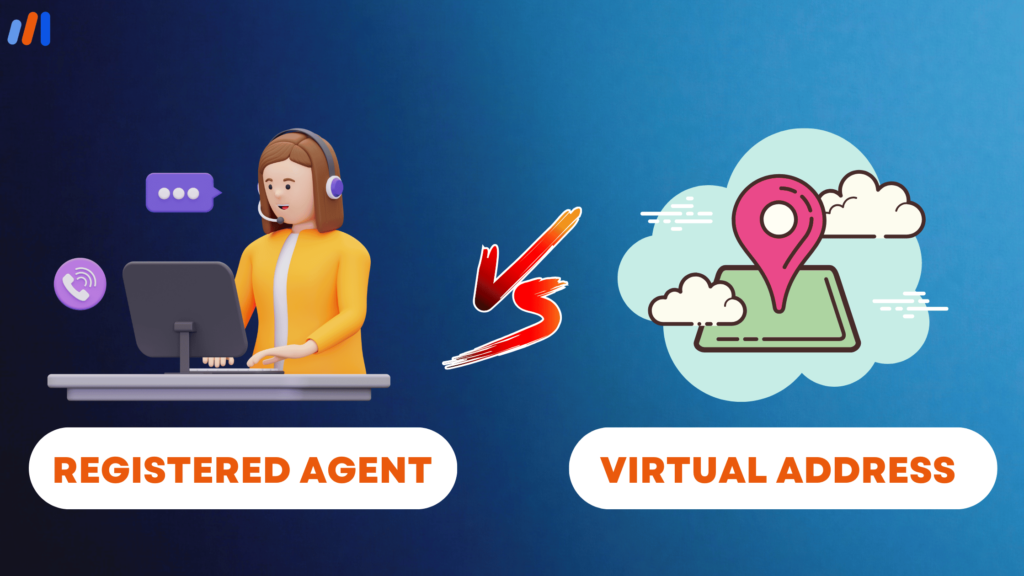
The Core Difference
A virtual office gives your business a professional street address for your website, invoices, business cards, directory listings, and (in most cases) your principal office address on state filings. It typically comes bundled with mail handling and, depending on the plan, phone answering and office access.
A Maryland resident agent (Maryland’s term for what most states call a registered agent) is a legal requirement for every LLC and corporation formed in the state. The resident agent’s job is narrow but specific: be physically present at a Maryland street address during business hours to accept service of process. Therefore, your business is sued, someone has to be there to receive the paperwork. Maryland law does not allow a P.O. box for this role, and the resident agent’s name and address become part of the public record on the Maryland Business Express database.
Can a Virtual Office Also Be My Resident Agent?
Sometimes, but not automatically, and this is the part most comparison articles gloss over. A virtual office address satisfies the principal office address requirement on your Maryland State Department of Assessments and Taxation (SDAT) filings. It does not automatically make your provider your resident agent. Resident agent service is a distinct legal role that requires the provider to explicitly accept that responsibility and be available to receive service of process during business hours.
If you want a single provider handling both, ask directly: “Do you offer resident agent service, or only a business address?” Some virtual office providers offer both as separate line items; others offer only the address and expect you to name a separate resident agent. This can be yourself, if you have a qualifying Maryland address, or a dedicated registered agent service.
Why This Matters in Practice
Getting this wrong has real consequences:
● If your resident agent role isn’t properly filled, you risk missing a lawsuit notice entirely. This can lead to a default judgment against your business.
● Using a P.O. box or a non-qualifying address for your resident agent, Maryland SDAT can reject your filing outright.
● Assuming your virtual office plan automatically covers resident agent duties and it doesn’t, you may be non-compliant without realizing it until a filing gets flagged or a legal notice never reaches you.
Setting Your Business Up Correctly
1. Confirm your principal office address. This is what a standard virtual office plan covers, and it’s what appears on your general business filings, website, and correspondence.
2. Separately confirm your resident agent. Either through your virtual office provider if they explicitly offer it, through a dedicated registered agent service, or through a qualifying individual.
3. Keep both addresses accurate with SDAT. If either changes, Maryland requires you to file an update (a Resolution to Change Principal Office or Resident Agent, generally around $25–100 depending on current SDAT fees).
FAQs:
Yes. A virtual office address is generally accepted as your principal office address for SDAT filings, as long as the provider maintains a genuine physical street address (not a P.O. box).
No. Resident agent service is a separate role that a provider must explicitly offer and accept. Confirm with your provider whether it’s included or needs to be arranged separately.
Yes, if you have a physical Maryland street address (not a P.O. box) where you’re reliably available during standard business hours to accept legal documents. Many business owners prefer a dedicated service instead, to keep their home address off the public SDAT record.
Your business risks missing service of process for a lawsuit, which can result in a default judgment, and Maryland can administratively flag or dissolve entities that fail to maintain a valid resident agent.
You file a Resolution to Change Principal Office or Resident Agent with Maryland SDAT. Fees are modest but change periodically — confirm the current amount on SDAT’s site before filing.